ER MODEL (Entity Relationship Model) – Part-1
Before define ER Model, there are some terms which is require to understand ER model properly. In short, ER Model is a diagrammatic representation of entire Database tables. It represents a High Level Database Design.
For Designing the Softwares : This phase is done in softwares by UML (Unified Modelling Language).
For Designing the Database : ER Model is used to design database.
Definitions :
Entity : an object (Record in the table). It a a real world object, such as person, place, thing, event, or concept about which information is recorded. For example, In a banking environment, entities are CUSTOMERS, BANK SUPPLIERS etc. Entities may be –
- Physical – Can be touched(sensed) Example Fan.
- Conceptual – Cannot be touched. Example course offered, brand name etc.
Storing conceptual entities is a big problem.
Entity Types : is defined as a collection of entities that have the same attributes. For example, employee in a company database. As same attributes are shared by the employee entities, but such entity has its own value for each attributes.
Entity Set : Collection of similar entities of same type that share the same attribute at any point in time. For example, a Faculty set may contain all the teachers of a college, Set of all persons, Set of Companies etc. The Entity Set is also called
extension of the Entity Type.
Attribute : It is the name of the column. An attribute gives the characteristics of the entity. It is also called as data element, data field, a field, a data item, or an elementary item.
Some examples of Attributes which clear the concept of attributes –
a) A house can be described by its colour, size and surroundings
b) A bank account can be described by its bank account number, account
   type, account balance, account statement etc.
c) A customer of bank may be described by : name, address, customer ID
   number, phone number.

So, in example a) colour, size and surroundings are attributes of entity
   "HOUSE".
    In example b) account number, type, balance and statement are
    attributes of entity "ACCOUNT"
    In example c) name address ID number and phone number are attributes
    of entity "CUSTOMER"
Data Value : It is the actual data or information contained in each data element(attribute). The data element “Supplier Name” can take value as “Anil Mittal”
Difference between Entity, Attributes, and Data Values –
| ENTITY |
ATTRIBUTES
(OR DATA ELEMENTS) |
VALUES |
| CUSTOMER |
Customer ID Number
Customer Name
Customer Address
Customer Phone Number |
985678
Ankit Mittal
B-176,MC Colony, Bhiwani
57845-69821 |
| ACCOUNT |
Account Type
Account Number
Account Balance
Account Statement |
Savings
1800221133665587
125000
5000_Credit |
| SUPPLIER |
Supplier Name
Supplier Address
Supplier Phone Number
Supplier Bill Number |
Vishal Rastogi
H-456, Shiv Nagar, Bhiwani
789546256
B-896541 |
Difference Between Entity, Entity Type and Entity Sets –
| Entity |
Entity Type |
Entity Set |
| Entity is a person, place, thing, event, or even a concept. It may be tangible or intangible. |
An entity type defines the collection of entities that have the same attributes. |
An entity set is a set of entities of the same type that share the same properties at any point in time (or) It is the collection of entities of an entity type at a point of time. |
| For Example, Entity is e1 or e2 or e3 or an apple
where e1 e2 e3 are employees
and an apple is a fruit. |
For example, entity type is EMPLOYEE or Fruit |
Entity set is a bucket of apple, banana, mango etc. or {e1,e2……} |
Example :
| Entity Type |
Employee |
| Attributes |
Name, Age, Pay |
| Entity Set
(extension) |
| e1
(Rakesh, 40, 10000)e2
(Arun, 55, 8500)e3(Sandeep, 30, 14000) |
|
Notations Of above Definitions in ER Diagram –
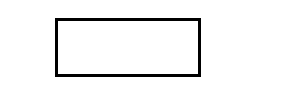 |
Entity Type |
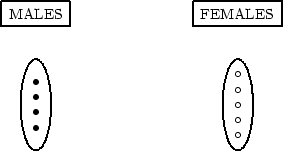 |
Entity Set |
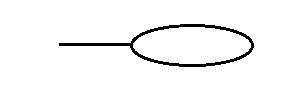 |
Attribute |
]]>